Sea Stories

sea stories

Stories from a career so far.

It’s been an adventure. Stepping back into blogging, I’ve been enjoying remembering and recoding these memories. Thanks to the friends, colleagues, and classmates who’ve helped refresh facts, figures, and details.

Sea stories

Sea stories are a foundational part of Naval culture. Whenever military folks get together — whether still on active duty or decades removed — sea stories will start flowing. They’ll usually carry valuable info, e.g. all junior officers on subs better know what a “trim party” is before they cause a breach, are inevitably self-deprecating, get style points for danger or malicious compliance with regulations, and serve as a shibboleth to find common ground across specialties, eras, and commands. Like fish stories, they often grow in the telling or with the addition of camaraderie and alcohol.

They’re also a lot of fun to write. They’ve given me excuses to shake the alumni network to check memories and timelines. I plan to keep doing them.

I also realize that not every reader wants to learn about what happens when a nuclear reactor drops a control rod into the core. Or how to properly flood a hallway to conduct carrier landings. So, I’ve added “Sea Stories” as a tag and a section like “How I...” That way you can skip them when you are more interested in telling me why my thoughts on the future of AI and product development are wrong, but find them if you decide Sea Stories are your cup of tea.

[continue reading]

A Personal Computer History

Nothing like sitting in an airport after a redeye to get me pondering my history with computers. While I’ll defend Atari‘s honor — and am bemused by the random twists and turns that brought me there) — my Atari period was actually quite brief — 6th through 9th grade.

And then, Big Education forced me to start using an Apple. Today Macs are my primary computers, but it was a long path to get there.

1985-1988: I can play games during study hall?

I switched schools between freshman and sophomore years of high school (I don’t recommend it) but I quickly found an unexpected win. In 1985, we had a computer lab full of Apple ][+ and //e’s. Despite the limited graphics capabilities of that era Apple, the games were captivating. Games quickly replaced my previous study hall activity of devouring Clive Cussler, Isaac Asimov, and Larry Niven books, but there was a problem: you weren’t allowed to play games on the lab computers.

Unless you were the monitor.
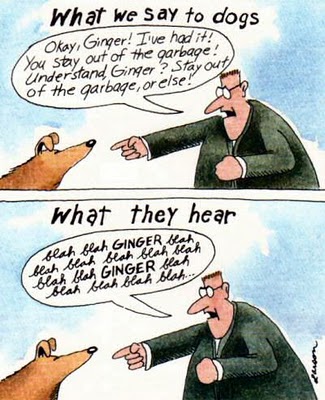
OK, if it meant getting to play games, I can work for The Man. There were some responsibilities involved, though I pretty much was Ginger in this comic — just s/Ginger/You can play games/. Moreover, monitor time also introduced me to the incredible world of writing viruses — did you know you could rename a file on disk to include invisible characters, making it nearly impossible to reference the file? This inspired a later “you shouldn’t have left your computer logged in” campaign at USNA, but that’s a story for another day.

[continue reading]

Hidden Places

Bancroft Hall

Bancroft Hall has 4.8 miles of corridors. It’s the largest dormitory in the world, with all sorts of secrets, quirks, and hidden locations. There’s a rifle range (Clancy’s Patriot Games got the location wrong), squash courts, King Hall, Smoke Hall (where you serve restriction and start fires), the Rotunda (the center of the picture above), and Memorial Hall (directly through the main entrance in the picture, then up some stairs).

The Top of Bancroft

Everything beyond this point is dumb. If you happen to have access to this location, don’t do what we did. Duh.

Our room was on 2-4, the 4th floor of the 2nd Wing. This meant we had not just recessed dormers (a.k.a. a private deck) but also easy access to the giant, Versailles-inspired copper gutters. These were an excellent way to move between rooms and explore the Bancroft roofline. An early reconnaissance mission was interrupted when we discovered a hatch above Memorial Hall. We’d seen The Goonies, so in we went.

It turned out to be a secondary machinery room for an elevator, with open access to the shaft. What really caught our attention was the ladder bolted to the inside of the shaft, reachable only when the elevator car was gone. Now fully in Die Hard mode, we had to see what was at the top.

[continue reading]

Engineers and boredom

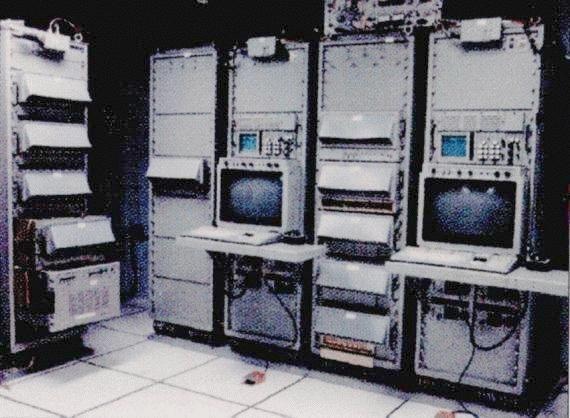
When I arrived at Lockheed Sanders in 1994, I was unusual: despite being a junior engineer, I had an active Top Secret/SCI clearance. This made me a cheap resource who could be put on our most secret and pricy projects. I was assigned to Combat DF and inherited the bugs the senior people didn’t want.

Almost immediately I received one that cracked me up. It was, roughly:

If you simultaneously push all the buttons above both workstations, the system will crash and reboot

If you imagine a CombatDF station inside a small compartment on a ship, you’ll immediately start wondering what kind of contortions would be needed to hit all of those buttons simultaneously. And who would think to do it? I knew. I knew immediately.

Bored kids on the midwatch. That’s who.

Weaponized boredom

Of the many things nobody tells you about the military is just how much time you will spend completely and totally bored. Part of why ships run drills all the time is that they fill time. Sure, they also contribute to the US Navy’s unprecendented level of training and damage control capability. Sweat in peace so you don’t bleed in war, and all that. But they also chew up time.

[continue reading]

the facebook mobile transition

Bruce and I joined Facebook in November of 2010, right after The Social Network was released. We joined as two of the dozen-ish Engineering Directors reporting to Shrep. Facebook had acquired our startup — Walletin — to bring in senior engineers who were proficient in javascript and client development. Why? Because Facebook was working on two mobile efforts that relied on high-performance javascript in the browser: a mobile version of Facebook’s platform that could run on mobile phones and the Facebook phone.

Farms and Feed

The game platform team sat right next to Mark and Bret, so this was basically our view on arrival

Although Facebook of 2010 was a largely desktop web experience, with a News Feed dominated by Zynga games, the iPhone was rapidly growing and it was clear to everyone that web usage on desktop was heading the way of the dinosaur. On the one hand, this was great for Facebook — Facebook itself is a far superior mobile product than desktop (sure, I have lots of friends who would take laptops to parties to post, but we’re a pretty nerdy group of friends.) It was obviously time to rethink News Feed, since anyone using it could see that an infinite series of nagging “click on my farm now!” notifications wasn’t good for Facebook.

But, Facebook Platform — and in particular, Facebook Game Platform — was valuable and it wasn’t clear how to make it run on mobile.

[continue reading]

walking into linden

As every person lucky enough to get old(er) realizes, it’s pretty remarkable how quickly time passes. It was pretty close to exactly 25 years ago that my friend Daniel said he’d just met the most interesting founder and was trying to decide if he was nuts or not. I was at Pacific Coast Power and Light, coming off of Road Rash 64 and simultaneously helping build out the foundations for what would become MX 2002 as well as an ultimately cancelled PS2 FPS title we were calling The Banishers.

My then wife and Dan went to college together and we were catching up after an apartment move. He had signed an NDA, so he suggested I try to interview so that we could discuss it.

That evening, I sent my first email to Philip Rosedale.

Come on up

Philip responded immediately with the kind of energy that would make him such a joy to partner with. He said anyone Dan recommended must be pretty good (truth) and suggested I come on up to San Francisco and see what they’re working on.

A few days later I did.

At the time, Linden Lab was in an alley — Linden Street — in San Francisco, between Dark Garden and a body shop. Three stories of light industrial space with advanced for its time camera pointing at you when you rang the bell.

[continue reading]