· 3 min
Flow
As I’ve written before, I don’t find blanket AI objections to be particularly compelling. Sure, don’t throw slop grenades, but OODApedia would be impossible without agentic writing (and, lol, every “detect agentic writing” model wildly miscategorizes it). Yes, you still better understand what you’re trying to deliver, but hand code inspection of every line of code isn’t valuable. It’s all about how you use agentic, how deeply you want to engage with, how much taste you bring to the problem.
There are, however, two areas I have strong opinions about the ongoing limitations of agentic. I’ve already read about the first, how to manage credible bullshit. The second is related to the single-player nature of current agentic tooling: the lack of flow in agentic development.
Flow
Mihaly Csikszentmihalyi named something many of us have experienced in software development — and other deeply creative endeavors — giving us identifiable features of the experience:
- Optimal experience: A state of deep joy, creativity, and high focus
- Time loss: People forget about time and their worries while in this state
Who hasn’t had this feeling while working on the right kind of problem — hard, but not too hard — where the day is gone. A CD on repeat listened to a dozen times. The sudden realization the office is empty and it’s dark outside.
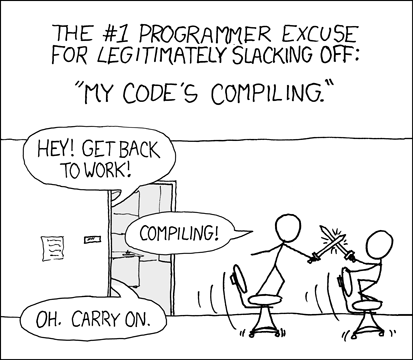
Much of my career has had a background focused on optimizing the software development lifecycle — whether CLI or IDEs — for flow. Edit and continue in Visual Studio. Incredibuild to avoid XKCD moments. Live UX refresh with PHP, React, React Native, node, etc.
Agentic development couldn’t be less aligned with this. We’re even measuring — and frontier labs are competing — on doing the opposite. Long, autonomous task completion.
From an efficiency/productivity perspective, being able to reliably hand long-lived tasks to agents is incredibly impactful. But also wildly unsatisfying if you want to really wrestle with a problem.
Continuous partial attention makes it worse
The response is to split attention further. Better harnesses, more parallel work, more work in flight. All the challenges of complex, technical line management without the reward of making a team sing. And exhausting. Worse, despite every nerd on the planet bragging about being a great multitasker, people aren’t actually very good at it.
Even before AI, we knew this style of work wasn’t effective or healthy and current AI work demands it.
Continuous partial attention is fundamentally anti-flow. And as challenging and frustrating as all this is, working in teams is even worse.
Multiplayer
Hopefully you’ve experienced a small, high-performance team entering flow together. Hard problems, pressure, and intensity, while working with teammates you trust. It’s an awesome experience.
An experience agentic work — and current agentic tools — does not support. If you’ve attended a hackathon with agentic development, or watched teams collaborating with agentic, the spikey, async nature of agentic collaboration greatly hampers the deep, synchronous collaboration multiplayer flow requires. This is why addressing this is #3 on the manifesto.
This isn’t just about agentic coding
Any product focused on multi-user, multi-agent collaboration — our core products at Onebrief — wrestles with the same challenges. It’s incredibly vivid in highly regulated fields and products, where it isn’t enough to bring new capabilities to one user but instead where an entire team needs to reach better outcomes together. Worse, when teams accept single-user AI products, they deprive teams of the collaborative expertise so critical to fully capitalizing on AI.
Fortunately, if you are a product developer, this is an exciting moment. Especially if you’ve spent time building multiplayer games — and learning all the painful and important lessons about when and how to hide latency, how to balance sync and async collaboration, where to push tech to the edge — building better AI tools, systems, and products is the opportunity.
Because games are the other place we have all found flow. And those learnings will apply to AI experiences, too.