Improvement
The debrief is a foundational part of military operations. No matter how perfectly an evolution or mission went — and, to be clear, they rarely go perfectly — there are always details to discuss. The most precise and expert teams — the Blue Angels, SEAL teams — debrief the most regularly and effectively. My friends at Afterburner — all fighter pilots — have built a great leadership training program around the idea.
Mentorship
Early in my time at Google, I was fortunate to cross paths with the incredible Fred Kofman. Fred and I were both tasked with improving overall organizational efficiency — me through my tech advisor role and TAG, Fred through exec leadership and coaching — so we quickly started comparing ideas and learnings. Along the way, Fred became both a dear friend and mentor.
Mentors are funny things. I’ve found myself chatting with friends and colleagues about their mentors and how important those people had been to their careers. I’d never really had mentors like that, never found leaders to follow from company to company. Post-divorce, I was discussing this with a therapist and he pointed out that you tend to find mentors when you’re open to having them. Huh, that’s obvious once said. So, while I had always been curious about other people’s knowledge and expertise, I resolved to be more intentional about really learning and changing as a result of those interactions.
I soon changed from simply collaborating with Fred to actively seeking his opinions and guidance. Fred became the first of multiple mentors over the last seven years, one who has deeply shaped how I approach leadership and product development. He also introduced me to free diving and spearfishing, but that’s a story for another day.
What would have made today better?
First off, you should stop reading this and go read Fred’s books. It’s OK, I’ll wait. Reading Fred, it’s unsurprising that he caught the free diving bug. There’s really no sport with a higher need for presence, a willingness to push yourself, and the balance between process and adaptability. The military aspires to teach leadership and management in the same way, so we very much bonded.
One of the best lessons I have taken away came not from reading his books nor from discussions inside Building 40. They came over dinner anchored far off the coast of Belize. As he described it: “I could spend time anywhere. This is the most beautiful place I have found.” He’s not wrong. Lighthouse Reef has to be seen to be believed. The days were spectacular, filled with great dives, memorable shark encounters, fresh fish, and long conversations about creating and leading.
But no matter how perfect the day seemed, over dinner Fred would always do a debrief. His version began with:
What would have made today better?
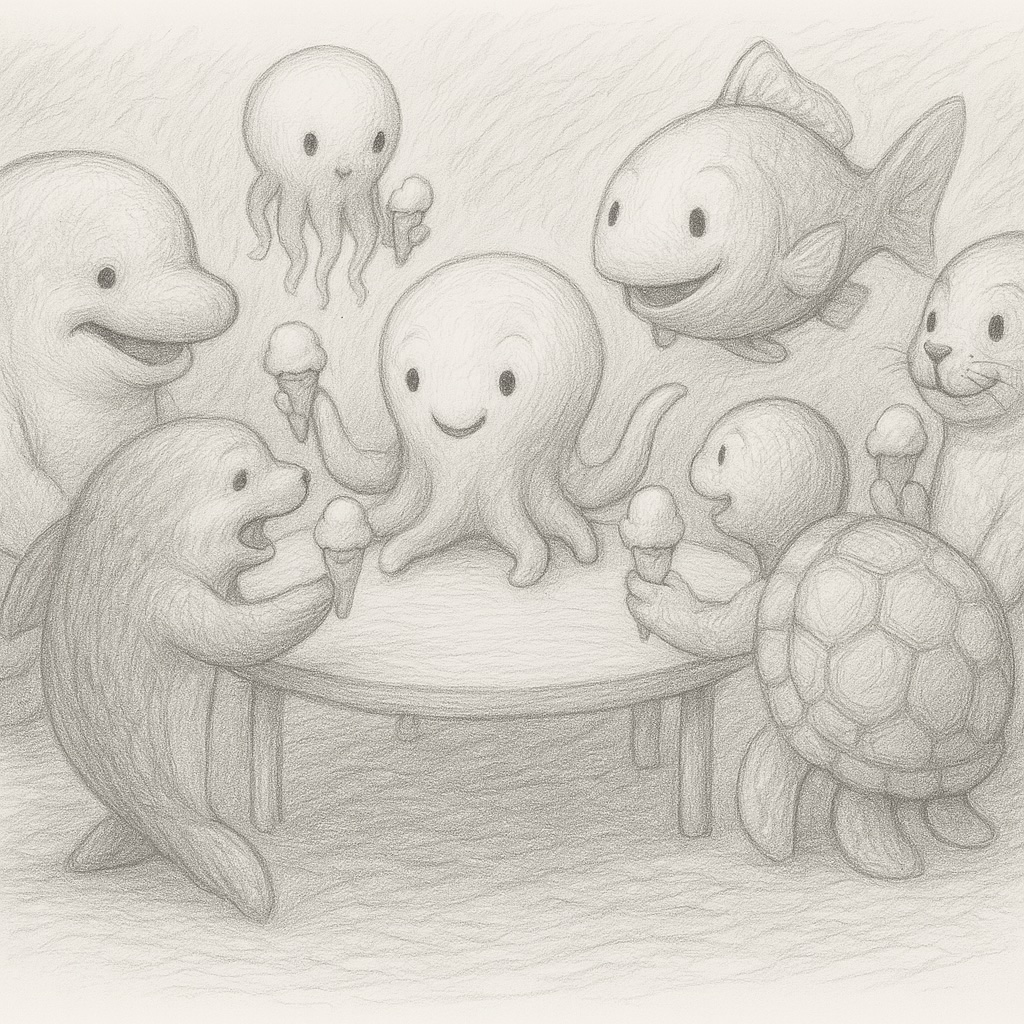
It’s a deeply thoughtful and gracious way to create space for real conversations. We’ve since used it in our own family — we have discovered that the answer often includes “ice cream” for some reason — and I’ve also used variants of it in design critiques, incident reviews, and architectural discussions. By starting with a positive framing but not accepting “oh, today was perfect” you pull people in. You create a debrief that demands participation but remains cordial, that emphasizes that ideas are worth interrogating while respecting the people you’re discussing them with. It has never failed to lead to better ideas, designs, and plans.
And it often means you get to go get ice cream.