howi

Want to understand how I approach problems? How I learn new things?

How I… is the place for you! There are the posts where I explain how I do what I do.

These techniques work for me. You do you.

Dichotomy busting

I wish I could point to the first time I did it, but as long as I can remember I’ve had a habit when faced with an either-or choice:

  • Go for a run or lift?

  • Hiroshima- or Osaka-style okonomiyaki?

  • Should we build it fast or reliably?

Why not both?

It’s been my experience that in most situations, when someone presents an either-or decision, the most useful way to understand the decision is to imagine how you would do both. Experience both. Try both.

It might be too costly or time consuming. You might not have the resources or expertise.

Or, it might lead you to a new position. Take the “fast or reliable?” question that every engineer uses to bludgeon managers into either forgiving sloppiness or giving them more time or resources. Except, here’s the thing.

It’s total BS. The whole reason we have prod infra or pick efficient platforms/technologies is that so we can deliver products fast and reliably. If that isn’t your reality, fix it! Worse, if you allow teams to operate in the space of this tradeoff, suddenly everyone accepts that slowness is the price of being good. Charity’s “In Praise of Normal Engineers” is another dichotomy buster.

But you might not know it’s bullshit until you really try to do both.

Feeds and high volume content

How I’ve changed my thinking on attention is similar. Do you want to deliver content that’s high quality or from a broad corpus? As if there’s no way to do both.

Ratcheting Agreement

At Google while I was Sundar’s Tech Advisor, I built a tiny team called TAG, the Tech Advisory Group. Our mission was to support Sundar and Google’s most strategic endeavors, from improving how we used OKRs and KPIs (despite Google’s history with OKRs, many teams struggled to use them effectively) and staying up-to-date on technical advances, to long-term visioning and risk analysis. It was a thrilling and tense job during the creation and emergence Large Language Models. It’s a real source of satisfaction to look at products and strategies today that came out of our work.

Birds on a wire

By far the hardest part of the job — and the most challenging to teach — was managing the limited time and misaligned incentives of senior leaders. At Big Tech companies, senior leaders are running Fortune 500-sized businesses. Unlike those CEOs, internal leaders also have to navigate strategy taxes, align with the overall company vision, and navigate peer teams with overlapping responsibilities.

A drawing of several birds sitting on a power line

TAG was often responsible for finding solutions that cut across those senior leaders — and all of their differing incentives and goals. Our friend Fred had a great comment about the position we were in:

You are birds on a wire. You’re between incredibly powerful people and like a bird on the wire, if you touch either pole you’re going to get fried.

It was such a powerful point, it became how we described ourselves. Birds on a wire. We were catalysts, expediters, and innovators, but we needed to operate with zero explicit authority and our wins would always come through other leaders’ success.

Almost always, that required them to succeed — and agree — with other leaders.

Ratcheting 101

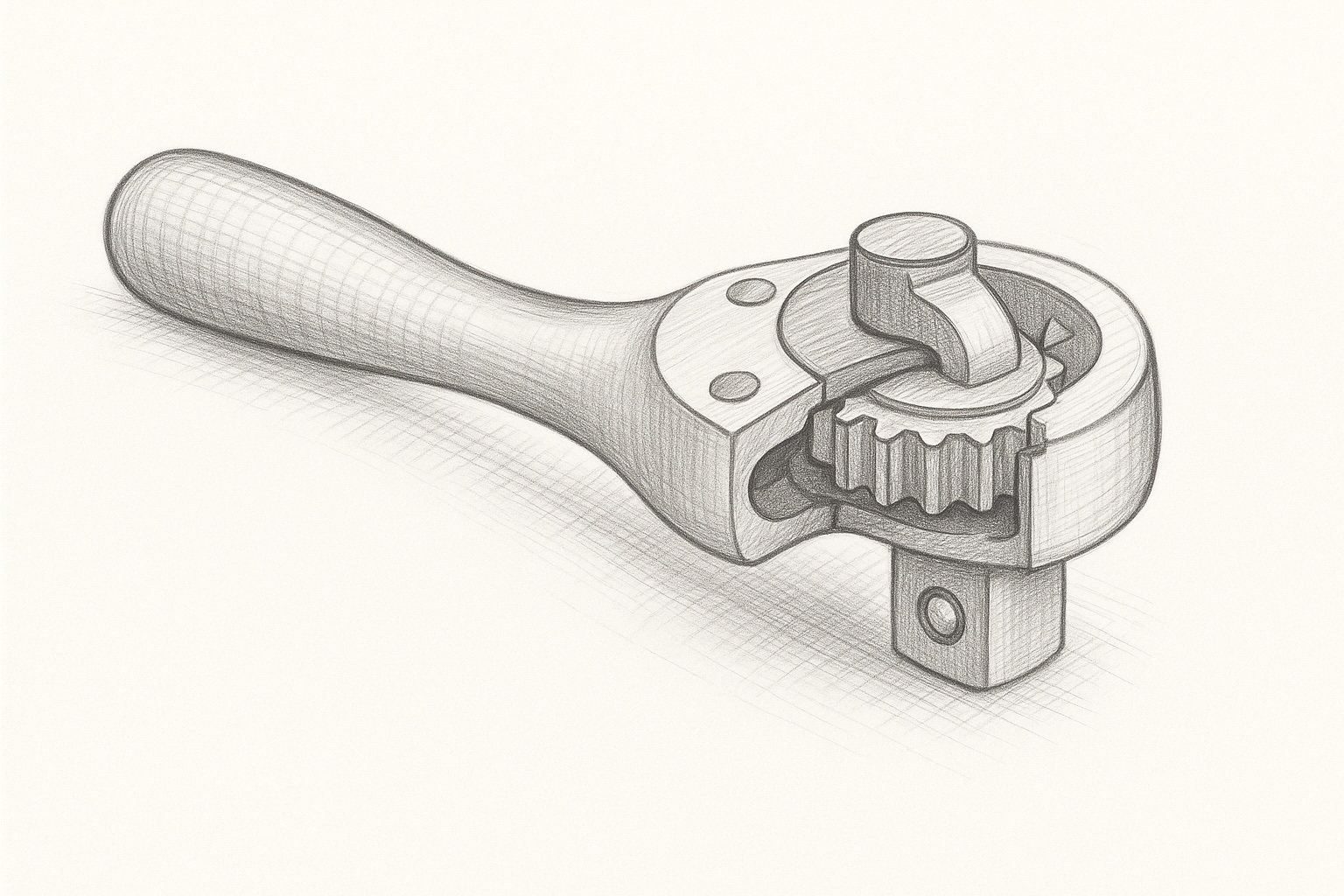
Our first and most intentionally used tool is something that I try to use in every discussion and meeting: the ratchet. It seems simple and obvious, but was so unreasonably effective at Google (and Meta) that I am regularly asked “how were you able to get that done?”

  1. Go into meetings with senior leaders with a clear agenda and goals. Share it ahead of time and treat them like adults (e.g. expect them to have read it; as you identify those who don’t, build specific scaffolding for them that doesn’t waste everyone else’s time).

  2. Frame the discussion around the agenda and goals. Confirm the areas of agreement you achieve.

  3. Leave time to recap as a conclusion. Confirm live the agreements you reached and that you will own following up.

  4. Follow up. Thank them for the work getting to agreement and memorialize this agreement in the follow up. Remind them of the context. Be clear about any remaining work or next steps.

A diagram of a ratchet mechanism, showing how it moves in only one direction

This is the ratchet. The follow up email — built on top of the meeting conclusion — is where you get a paper trail of your agreements and how they fit into the larger goals and story. This is the email you’ll use when a leader goes back on the agreement later — not to call them out, but to work with them about what might have changed given their prior agreement.

Note that this works no matter how little was agreed to

Ratchets are great tools because they allow you to apply force in one direction without backsliding. Any click forward is a win. It’s the same with large organizations with conflicting goals. Any agreement — if you can hold on to it — is a huge win.

It also removes the pressure of having to do single-stage-to-orbit in one meeting. No SVP managing billions of dollars in responsibility is going to agree to something that constrains them all at once. Nor should they. But it can kill a CEO’s effectiveness for those same SVPs to never agree.

Commit and disagree

Amazon has a “disagree and commit” company value. Google’s is to commit and then disagree.

— Anonymous Google Engineering Leader, trying to convince me TAG’s mission was impossible

Smart creative people love to argue about things and tech companies are full of smart, creative people. It’s why Amazon made it a Core Leadership Principle, part of “Have Backbone; Disagree and Commit.” But most organizations struggle with this, so you’ll need to navigate it.

When you do, use the ratchet. By forceing discipline and alignment around goals, creating ways to preserve agreemnet, and prevent backsliding, it gives you powerful tools to collaborate and help leaders reach better outcomes.

How I...Become a Regular

A friend and former colleague reached out after reading the mobile transition and other posts with a good suggestion:

The “what happened” is fun, but I’d be more interested to read about how you do what you do.

I thought it was a really good suggestion! I’ve added a new section “How I…”

And to get things started:

How I…Become a Regular

I don’t know about you, but as a kid, one of the coolest moments in movies was when our hero walked into a restaurant, got greeted by name, and taken to a great table. Inevitably, the chef would come out and casually mention that they were “working on something special” and offer to give them a taste. Billions’ showrunner, Brian Koppelman, captures this with Axe brilliantly.

me

To me, this always seemed magical and unattainable — like the surfing and skydiving in Point Break. But, as I’ve gotten older, I discovered I have a real knack for it. Being a food fanboi helps, of course, but when a SmartNews colleague asked how the hell I already knew so many chefs in Tokyo — a city I had never spent time in — it felt worth writing up.

Because, like anything else, there’s a playbook.

Becoming a Regular 101

Here’s the secret: you become a regular by being a regular.

  1. If you really enjoy an experience at a restaurant, let the staff know on your way out. Be genuine about this and read the room, e.g. a good-to-great tip, don’t waste anyone’s time (especially if they’re in the weeds), and don’t be demanding about it. The experience and the team who made your meal memorable are the focus, not you.

  2. Go back. Not necessarily the next night — though I have done this — but within a week. (Pro move: make this reservation before you leave) Make a reservation so you get your name into their system, if there’s a chance to indicate it’s a return visit do so, don’t have expectations of being recognized, and enjoy it all again. Bring some friends who weren’t there the first time and let them enjoy it, too. If the host or chef gives you a card, send them a thank you note and what made it a great experience. Don’t forget good-to-great tip.

  3. Go back, again. Make a reservation. Again, don’t have expectations, bring a friend or two who’ll enjoy it, maybe a repeat from the first two visits. If it’s a well run restaurant and they’re not absolutely slammed, a host, server, or owner/chef will likely say hello. You’ll almost certainly get a card or contact info, if you do, send a thank you note.

That’s it, you’re in. When you go back, someone will almost certainly say hello, check on you, and general make sure that while every guest is having a great experience, you are getting a great experience, too.

What if nobody notices? What if you’ve gone back, been kind, tipped good-to-great, and still…nothing? Well, there are really two options. First, maybe the restaurant is so damn busy and popular that they’re constantly in the weeds and just hanging on for dear life. Be patient or pick quieter times to show up. Try the blue plate special or visit on Tuesday. Second, it’s not a well run restaurant. Nobody is reviewing reservations, the staff isn’t being trained or cared for, or it’s a vanity or hobby project that will vanish in a few months. Move on, try the next cool spot you’ve had your eye on.

What to Do Once You’re a Regular

Nothing! Keep going to the restaurant and don’t be a douchelord.

  • Don’t try to make this about you. Everyone who’s in the restaurant business — and working the frankly insane hours they do — is doing it because they care about service and bringing you an amazing experience every time. Being a kind regular can make their day a little easier which translates to an even more magical experience for you.

  • Be cool when the chef or server brings you something special to try or asks for your opinion about a special. You’re now part of the team, help keep it amazing place to visit.

  • If you spot something going wrong, consider politely mentioning it. This one is tricky, but most of my friends who’re in the business say they’d rather get the feedback right away. Again, key here is to not make it about you or because you’re somehow entitled to access.

  • Don’t try to take advantage of it. Yes, everyone who’s ever had the phone number for a maître d’ has texted them with the “any chance you can sneak me in as a party of 2 sometime tonight?” That’s normal, expected. Just be prepared for the answer to be “no” or to have conditions like “can you be on time and out in an hour?” Don’t be a jerk about it if you don’t get the answer you wanted.

me

Being a regular isn’t actually about you, it’s about making a place that you love an even better experience for everyone. Share your love for it with friends.

Don’t be Tyler bragging about your Pacojet.

Author’s note: Hey, Pacojet, when you read this know that I would absolutely accept sponsorship of this blog from Pacojet. I’d even come to Rotkreuz to discuss it. Despite my limited palate and poor technique, I’d use the shit out of a Pacojet and post many, many oversaturated pictures to Instagram.

Becoming a Regular 201

If you want to level up the experience, there’s another option. It’s not free, but likely way less expensive than you think — you definitely don’t need to be a character in Billions to pull it off:

A lot of chefs and restaurants will do catering. If you have a event or party, hire them! It will not only ensure your event has way better food than anyone will expect, it’s a chance to meet the team in a different setting and for many Chef/owners it’s an important part of their business plan.

So, there you have it.