reality is exponential
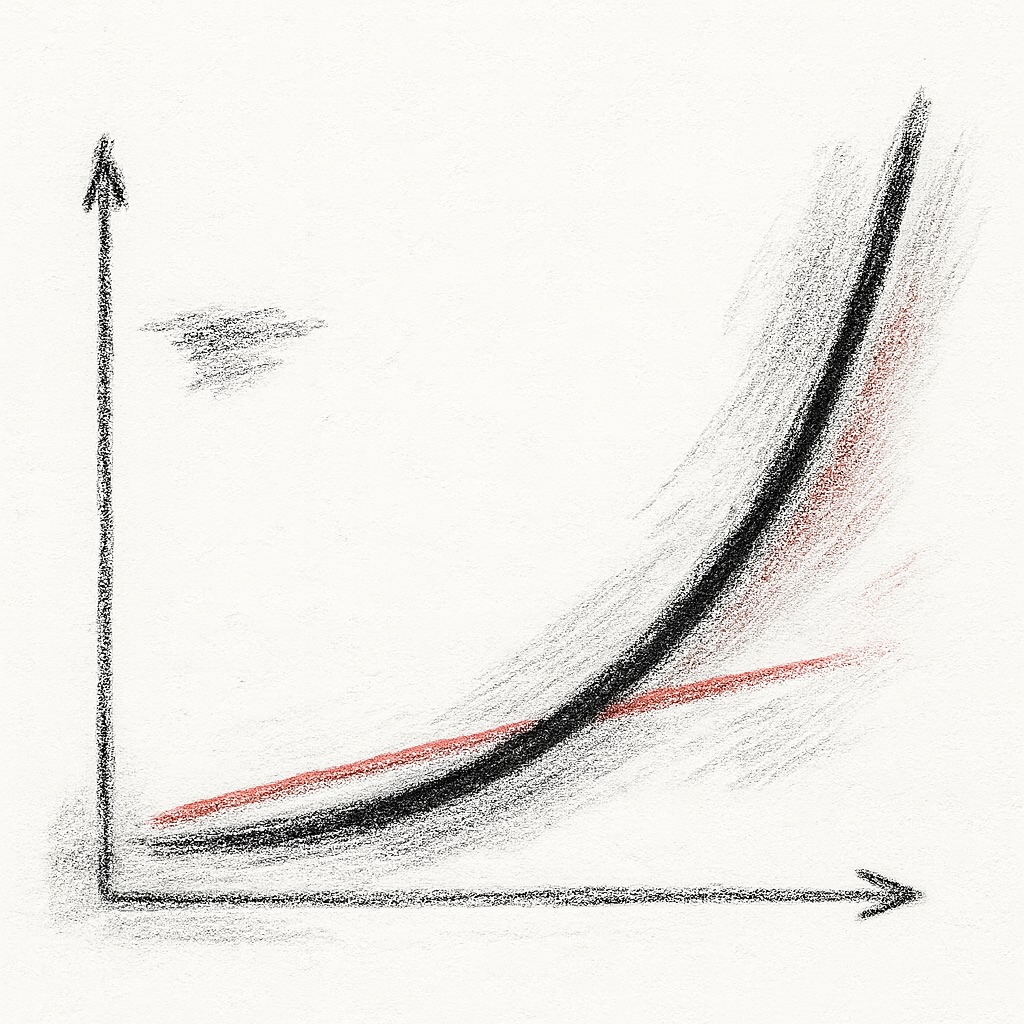
I’ve always loved the juxtaposition of linear and exponential growth.
Particularly the messy time when linear growth still looks like the winning path.
For most of the nearly 40 (?!) years that I’ve been paid to write code, I’ve been creating products and experiences in that liminal, transitional period when so many assumptions change.
It’s the most exciting time to build and create, because what’s possible changes incredibly rapidly and you get to deliver experiences people have never seen before.
Look at the s-curve go
I suspect most of you have seen a different formulation of the same idea: innovation through the overlapping s-curves.
Economists talk about innovation — productized knowledge — as productivity gains. As each new wave arrives, we see the benefits start slowly, take off explosively, and then tail off as the benefits just become part of the new normal.
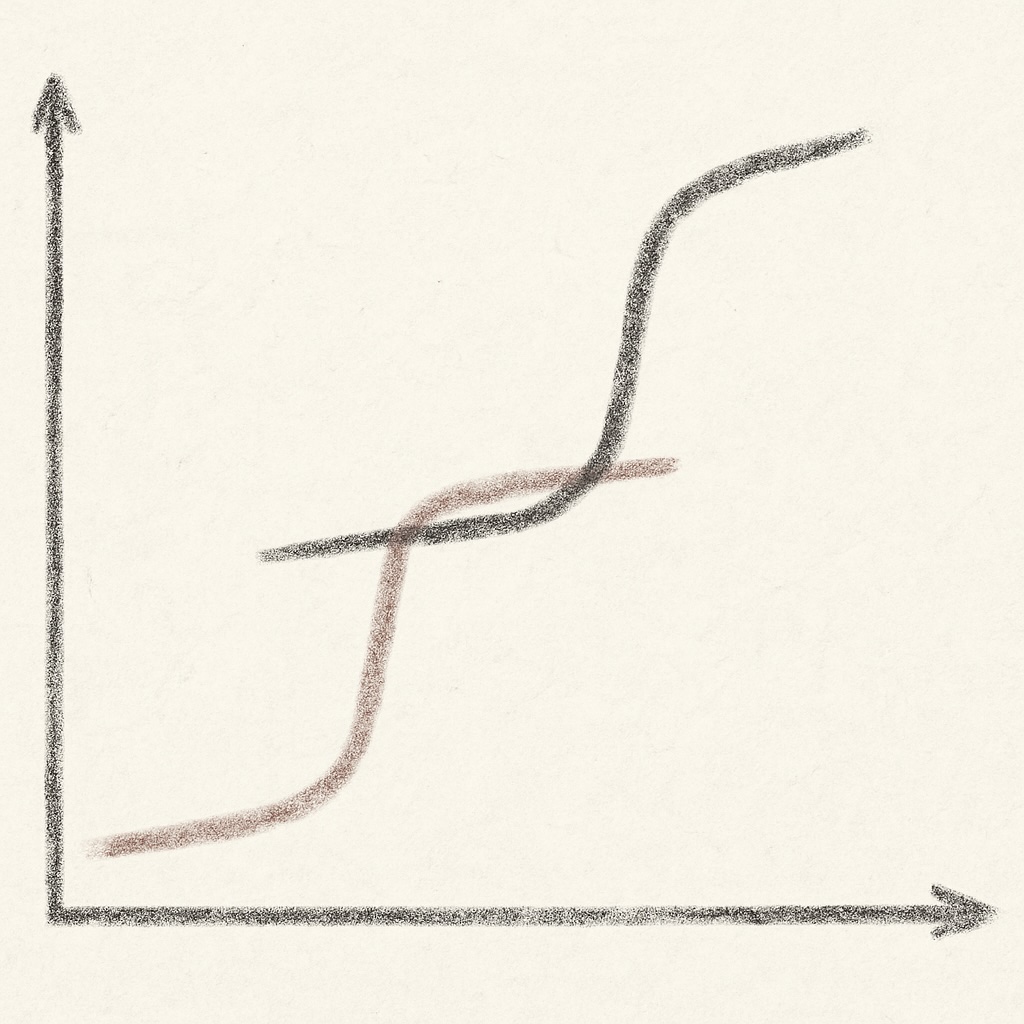
Until the next innovation.
Reality and predictions
The reason I prefer the linear and exponential version is that it captures both the most transitional moment, as well as three really important aspects of trying to lead and manage your way through transitions.
-
Exponential and linear growth has this dynamic. It’s mathematically true, but since most people aren’t mathematicians, it’s really important to help people and teams understand that the Sexy New Thing (tm) may underperform for a while. This is the period to control investment, to learn, and build expertise so that you’re ready for the knee in the curve.
-
We predict linearly but reality is exponential. Because humans tend to predict linearly — on average, predicting “what has been happening will keep happening” isn’t the worst bet — lots of our default cognitive and decision making processes will actively mislead us during these periods.
-
Exponentials are very hard to predict. Small prediction errors are massively amplified by exponential growth. I always think about my imaginary employee Bob who correctly spots the new exponential trend and sells his team and bosses on it. Fast forward a year and the Old Ways (tm) are way ahead and his exponential is languishing, so Bob gets canned. A year later, as the now neglected exponential change comes rampaging through, cries of “Bob was right!” echo through the halls.
This is the work
Nate Silver uses the term The River in “On the Edge” for people and communities who are better than average at navigating linear/exponential moments, and of course “The Big Short” is all about the investors who did (and did not) understand this. But what often gets missed in the big picture narratives around innovation and change is that navigating change is the work of managers, leaders, and creators.
AI is the most important innovation of my lifetime. Amidst all the discourse, product releases, and excitement, what I find most important to remember is where we are on that curve. We’re still on the flat part of the exponential. The mature ways of building products are still better in many cases.
But the knee in the curve is coming. The great leaders, teams, and companies are learning now.